Each winter, usually in early February, we make a tradition of heading north to Gardiner, Montana for a few days of soaking in the hot springs and exploring Yellowstone National Park through its iconic North Entrance. While summer draws the crowds, winter reveals a completely different Yellowstone—one that’s quieter, more reflective, and every bit as breathtaking.
Entering Yellowstone Through the North Gate
The drive from Gardiner to Cooke City through Lamar Valley is especially unique this time of year. It’s the only road in Yellowstone that remains open to the public throughout the winter months, offering rare access to one of the park’s most wildlife-rich regions. From Mammoth Hot Springs, visitors can also explore deeper into the park by snow coach or guided snowmobile tours—an experience we’ve enjoyed in years past.
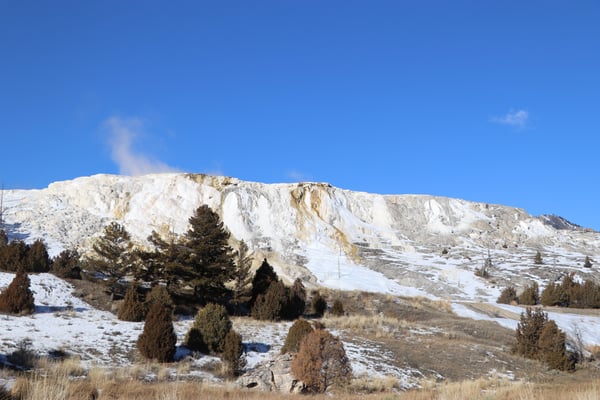
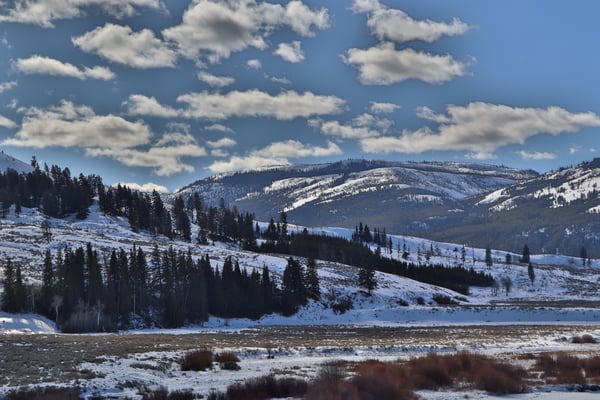
This winter, however, was unseasonably warm for our corner of the Rockies. Snow was light compared to typical February conditions, but that didn’t diminish the magic. If anything, the park felt even more peaceful. With little traffic and no summer congestion, Lamar Valley felt expansive and still—an ideal setting to truly take in Yellowstone’s raw beauty.
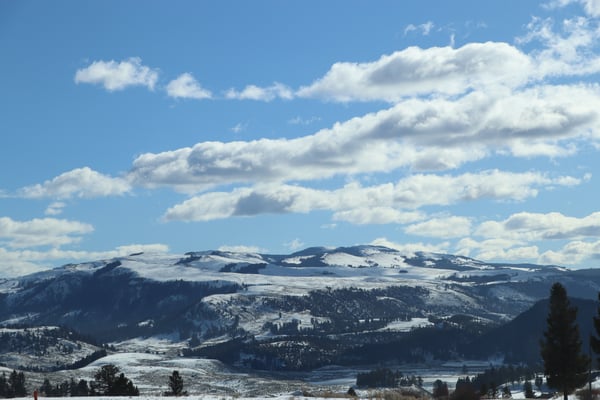
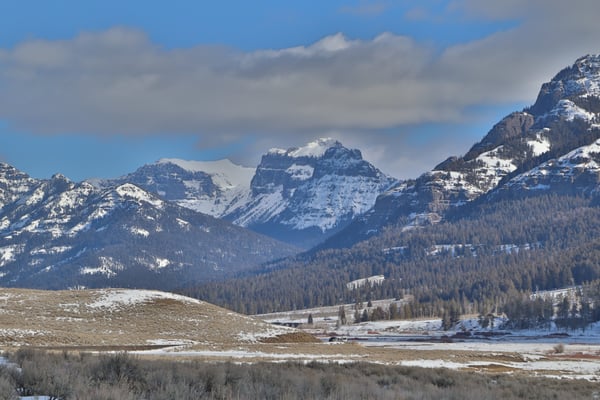
Wildlife and Winter Landscapes
As we neared the far end of Lamar Valley and Icebox Canyon, snow levels increased and the landscape shifted. Wildlife sightings were limited but memorable: a few bison and antelope along the way, and on our return trip, a solitary moose—an unexpected and special sighting.
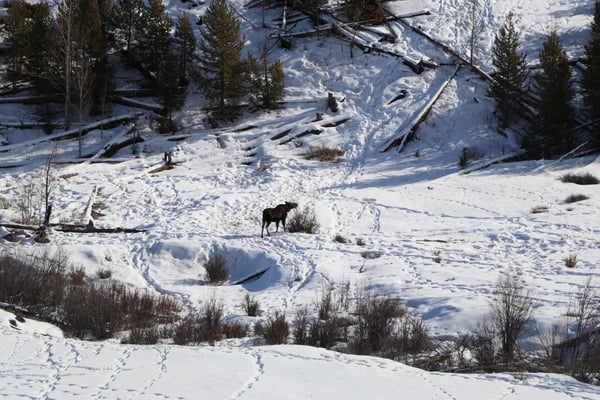
Moments like these are a reminder of why winter in Yellowstone is so captivating. The pace slows, the scenery softens, and every animal encounter feels personal.
History Along the Yellowstone River
On another day, we explored an old road along the south side of the Yellowstone River, tracing the park’s boundary just south of the entrance. This quiet route led us to the historic North Entrance Gate, home to the Roosevelt Arch, built in 1903. The inscription—“For the Benefit and Enjoyment of the People”—still resonates today.
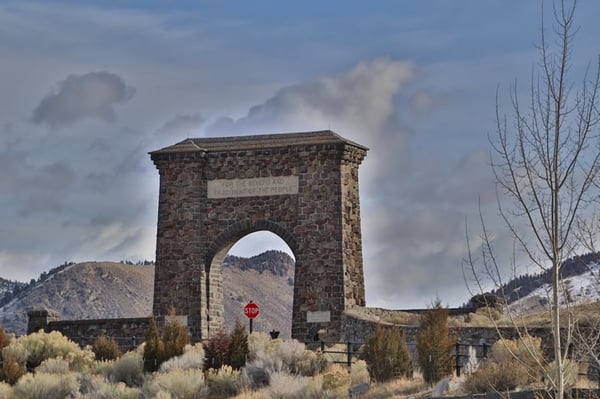
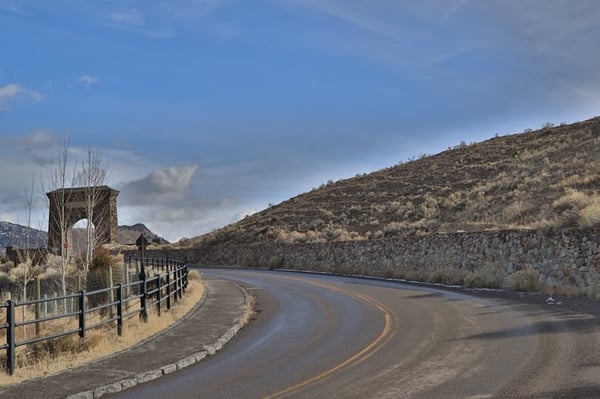
Along that old road, a rock wall built from the same stone as the Roosevelt Arch stands as a subtle reminder of Yellowstone’s early history and enduring legacy.
Where Rivers Meet: Confluence Park
Our exploration also brought us to Confluence Park, where the Gardiner River flows into the Yellowstone River. Even in winter, this spot feels alive—water moving steadily beneath the cold air, surrounded by rugged terrain and open sky.
Why Winter in Yellowstone Matters
Experiences like these capture what makes life in the greater Yellowstone region so special. It’s not just about the scenery—it’s about access to wild places, rich history, and moments of quiet that are increasingly hard to find.
At Canyon Real Estate, we’re fortunate to live and work in a region where adventures like this are part of everyday life. Whether you’re visiting for a season or putting down roots near Cody and Yellowstone Country, winter here offers a beauty all its own.